Come essere nello studio dell'artista. Com'è la mostra di Maurizio Donzelli a Bergamo
Quattro sedi della Città Alta di Bergamo ospitano l’Atlante di Maurizio Donzelli, protagonista della sesta edizione di Art Together Now. Gabriele Landi e Gabriele Salvaterra attraversano la mostra diffusa con questa recensione parlata, riflettendo su percezione, disegno, memoria e dialogo tra opere contemporanee e architetture storiche.
Fino al 6 settembre, in occasione della sesta edizione di Art Together Now, rassegna che si snoda parallelamente alle celebrazioni per la festa patronale di Sant’Alessandro, quattro sedi della Città Alta di Bergamo vengono abitate da installazioni e allestimenti dell’artista Maurizio Donzelli. All’Ex Ateneo di Scienze, Lettere e Arti, al Palazzo Vescovile (Museo Bernareggi), sotto l’Antica Cattedrale (ancora Museo Bernareggi) e all’Ex Chiesa di San Michele all’Arco, prende vita l’Atlante dell’artista bresciano, a cura di Giovanni Berera e Anna Bertulini Frigè. L’artista Gabriele Landi e il curatore Gabriele Salvaterra attraversano gli spazi di questa mostra diffusa, ne abitano le direttrici, riflettendo sul senso del lavoro di Maurizio Donzelli, nel suo interrogare continuamente sguardo soggettivo e percezione multisensoriale.
GL. Ad oggi ho sempre visto il lavoro di Maurizio Donzelli in contesti asettici o scarsamente connotati. Ti devo confessare che, in questa occasione, una delle cose che mi ha sorpreso maggiormente è proprio la capacità di dialogare con i luoghi. Capacità che mi sembra agire a più livelli simultaneamente: luce, stratificazione culturale… per citare solo alcuni dei tanti elementi presenti negli spazi che accolgono questa esposizione, diventano elementi con cui il lavoro di Donzelli mi sembra consonare appieno.
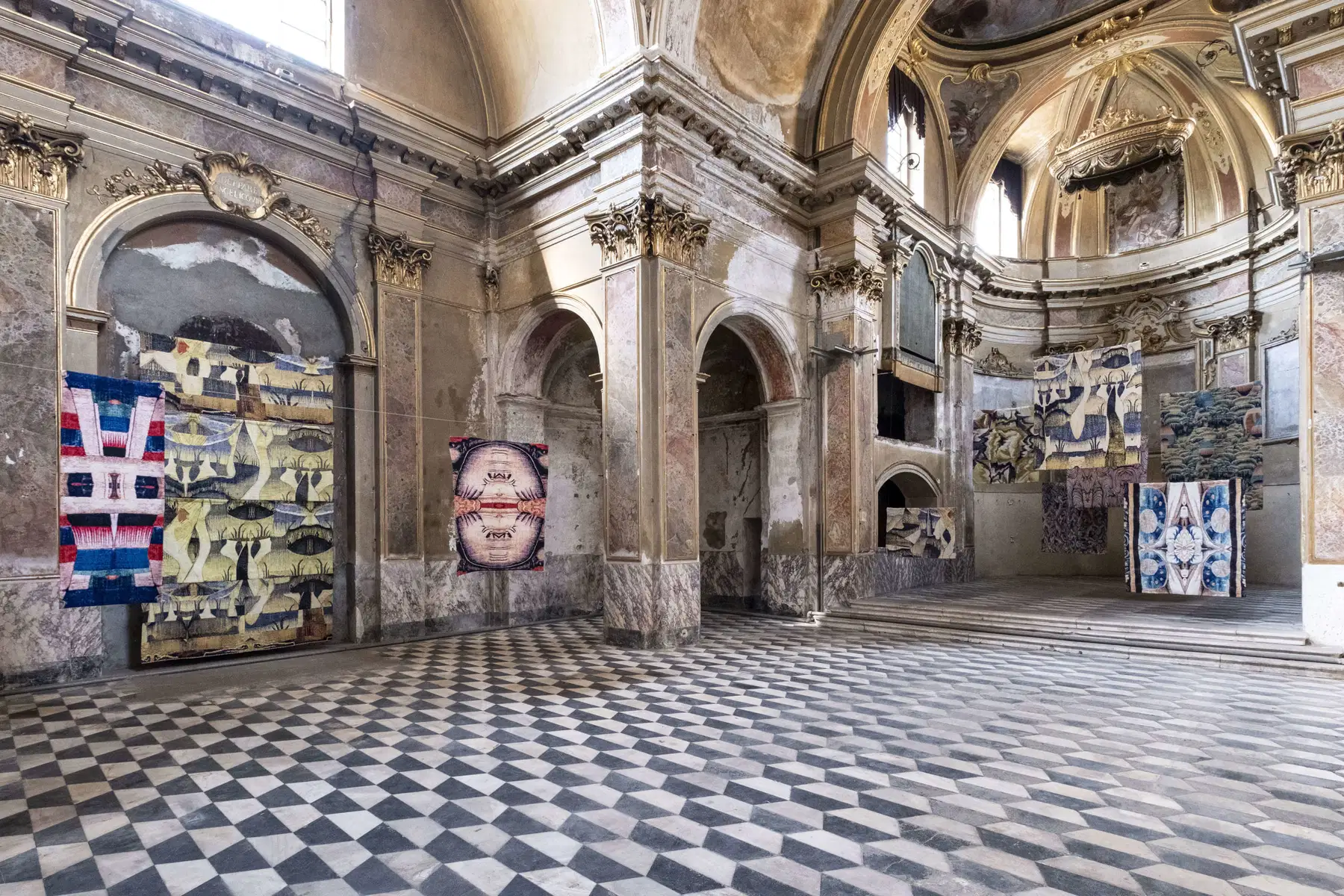
GS. Costretti per un periodo prolungato e “felicemente bloccati” nell’Ex Chiesa di San Michele all’Arco dall’interessante talk che vi si stava svolgendo, ho avuto modo di osservare gli arazzi e l’installazione di Maurizio per un tempo prolungato, vago e non funzionale rispetto alle solite modalità museali. Faccio una nota di contesto: la chiesa è un miracolo di trionfo e abbandono, gloriosità e fatiscenza, con epifanie barocche, zuccherose e quasi rococò e addensamenti, cadute, infiorescenze, inserimenti di travature metalliche contemporanee e struttura funzionali certamente sgraziate. Ciò che ho pensato rispetto all’intervento di Donzelli ha a che fare con la meraviglia. Mi ha fatto tornare ai primi frequentatori della chiesa e allo stupore che le immagini dipinte dovevano suscitare su una popolazione tendenzialmente analfabeta, non abituata alla nostra esposizione alle immagini mediali, interattive e in movimento. Così, anche i lavori nel contesto di Donzelli agivano come intensificatori di quell’esperienza, trappole percettive che si inserivano sugli strati iconografici del passato per rilanciare questa idea immaginativa, produttiva e meravigliosa. Sto esagerando?
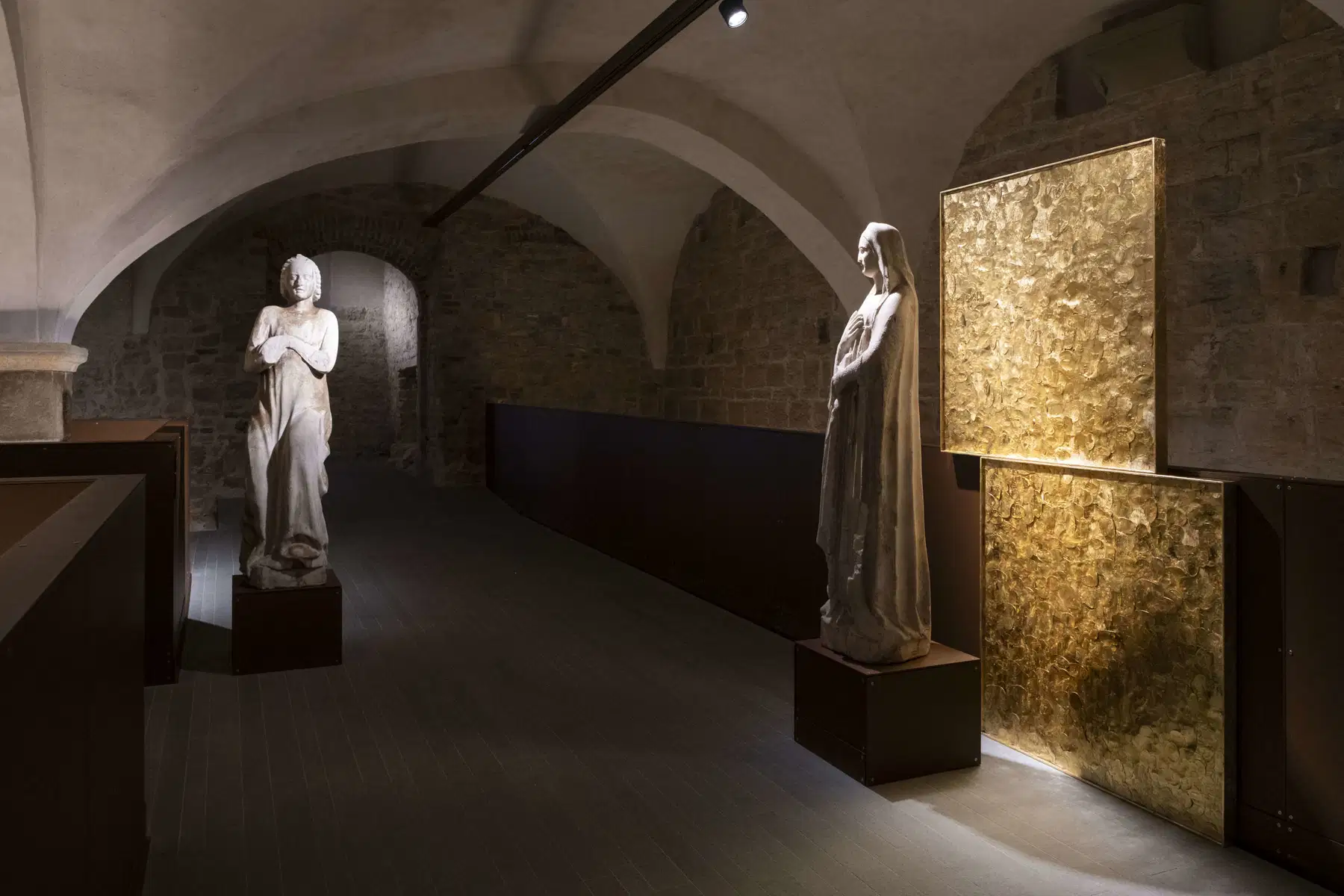
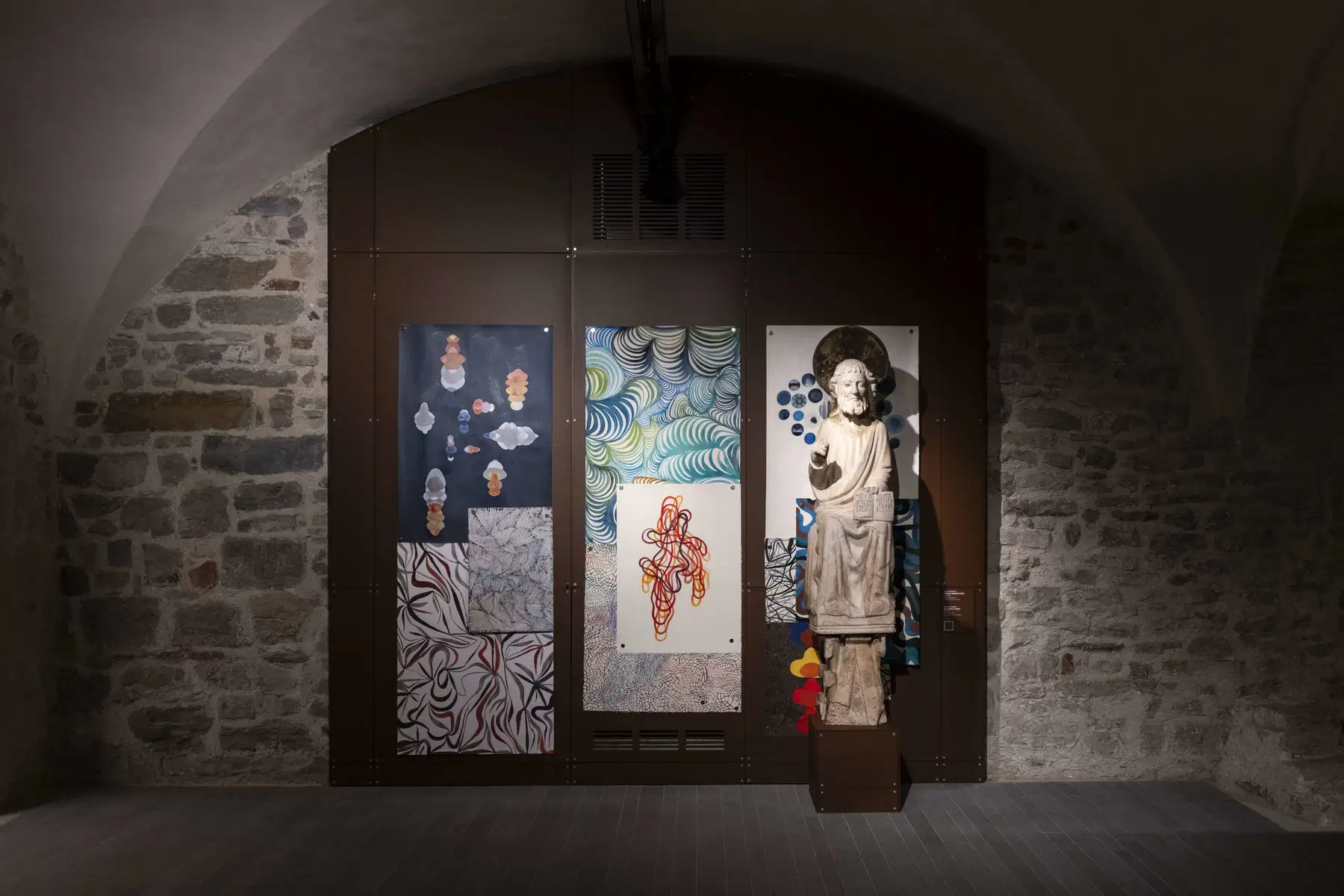
GL. No, niente affatto, anzi, mi sembra che tu abbia messo ben a fuoco la modalità con cui Donzelli si è approcciato ai luoghi in questa occasione. È come se il suo lavoro fosse lì da sempre. Talvolta si tratta solo di una sottolineatura discreta, come avviene all’interno del Museo Diocesano con i due lavori in oro posti dietro la statua della Vergine Annunziata. Altre volte, invece, come nel caso dell’installazione con gli arazzi palindromi a forma di pozzo nel tempietto, disposti su una superficie specchiante, l’artista si spinge fino al ribaltamento dello spazio, non solo in chiave ludico-illusionistica, ma soprattutto storico-simbolica, considerando che il tempietto è stato costruito proprio sopra un pozzo, il che crea un cortocircuito in cui, però, è impossibile cogliere l’interezza. C’è sempre qualcosa di sfuggente che si sottrae, rendendosi ineffabile.
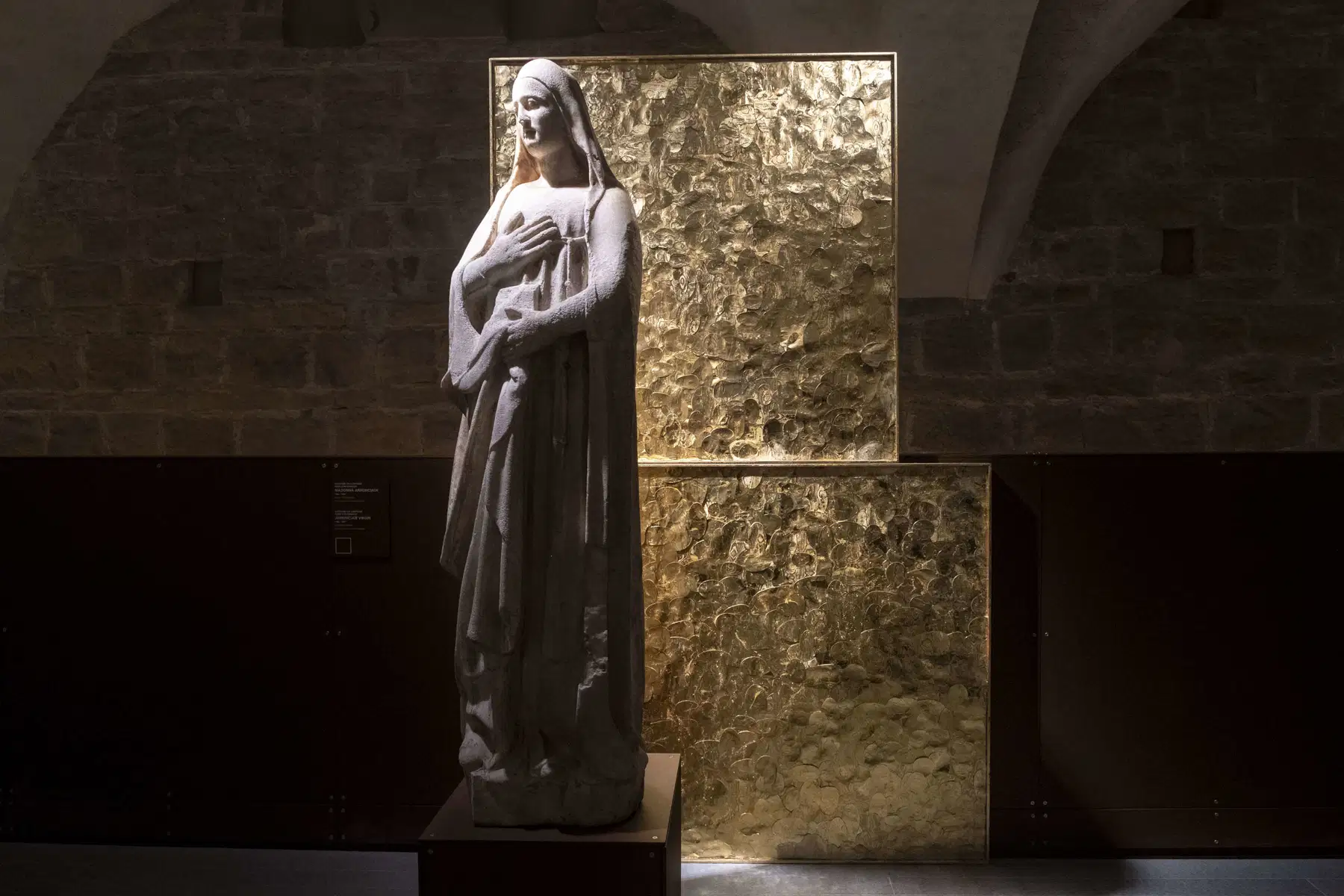
GS. Arazzi palindromi è decisamente una bella immagine. Sì, forse, visto che citi gli interventi al Museo Diocesano, varrebbe la pena sottolineare come i lavori di Donzelli, in quel caso, in una maniera più unica che rara nelle installazioni contemporanee, hanno deciso di fare da sfondo rispetto a sculture medievali. La Vergine Annunziata e un altro Santo che ora non ricordo. Le opere della serie O e i disegni di varia provenienza, si accostavano e sovrapponevano, semplicemente per dare una coreografia alla situazione che era realmente da vedere. Penso ci sia un discorso sui margini e sulla decorazione, sulle periferie dei linguaggi, che trovo molto importante. Non a caso nel Tempietto romanico di Santa Croce mi sono perso a osservare le decorazioni di finto marmo e le texture aniconiche che corredavano le pareti. Linguaggi atemporali (e laterali) che mettono in crisi le scansioni progressive della storiografia e che hanno molti aspetti in comune con lavoro di Donzelli credo. Quale pensi fosse la parte meglio riuscita? O c’è qualcosa che non ti ha convinto?
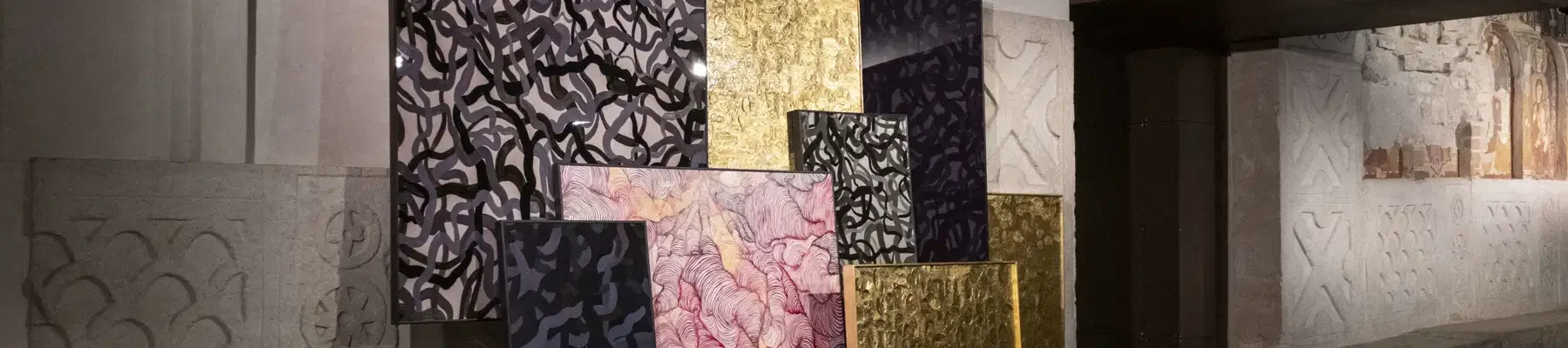
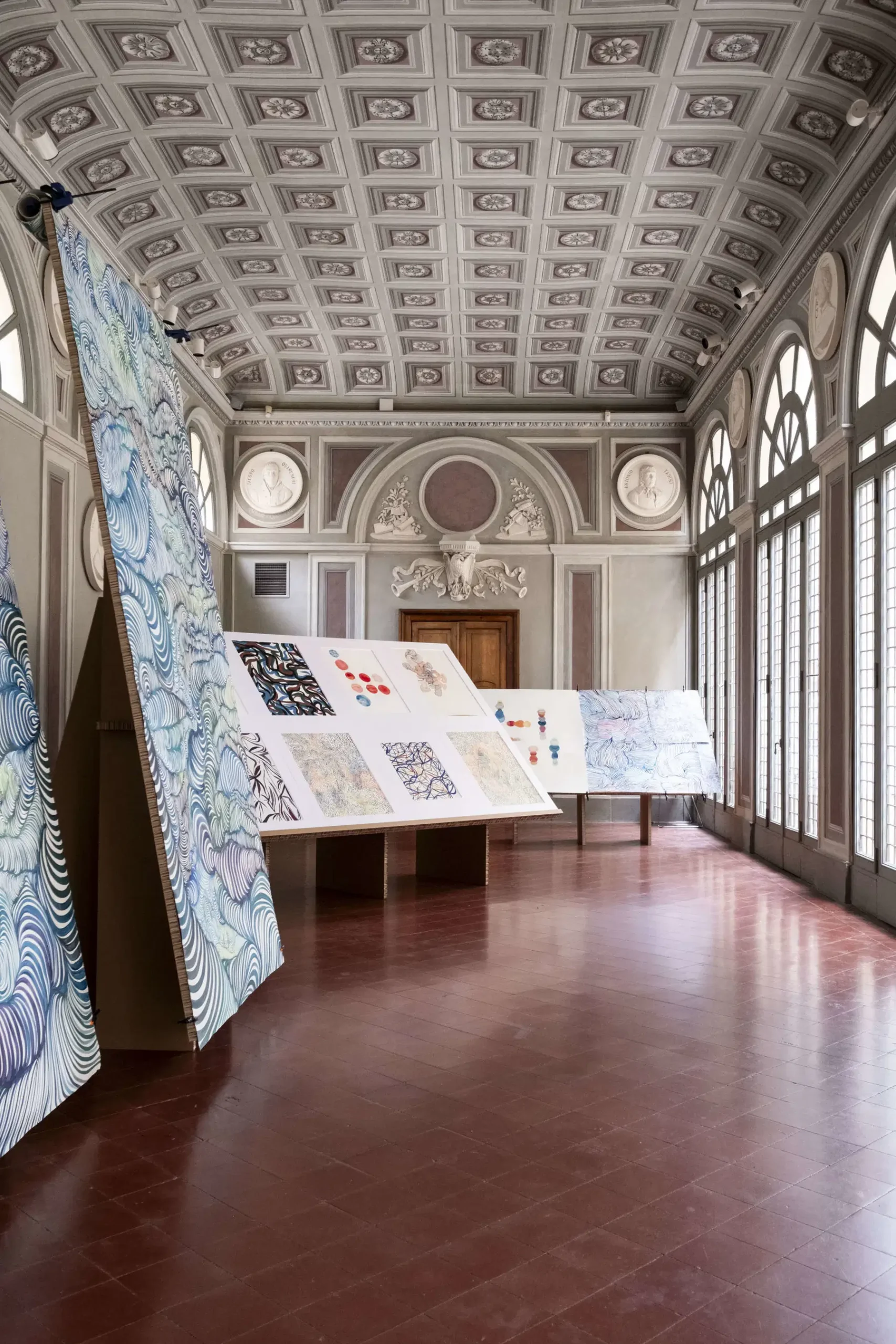
GL. Nel suo insieme, ho apprezzato molto la mostra e la varietà di elementi che riesce a mettere in gioco. Ho trovato che l’artista si sia messo all’opera con grande generosità, regalando a chi la visita molteplici chiavi di lettura che trovano la loro matrice comune nel disegno. Tale linguaggio ha una presenza rilevante nell’esposizione: sia nei piccoli lavori custoditi nelle due teche della Ex Chiesa di San Michele all’Arco, che meritano un’osservazione attenta, sia nei grandi lavori su carta presentati all’Ateneo di Scienze, Lettere e Arti. Qui, per volere del curatore Giovanni Berera, le opere sono esposte come se ci trovassimo all’interno dello studio dell’artista, fissate ai supporti con dei morsetti, una modalità diversa da quella solitamente adottata da Maurizio. Nell’ottica delle variabili che questa mostra mette in atto, ho trovato il secondo intervento all’interno del Museo Diocesano, quello in cui i disegni sono calamitati attorno a una statua di Santo, meno efficace, a mio parere, rispetto a quello realizzato con i due dipinti della serie O vicino alla statua della Vergine, che mi è sembrato più incisivo. Secondo te, invece, qual è la parte più riuscita o quella che ti ha convinto meno?
GS. In generale, era tutto funzionale a un pensiero percettivo ampio, stratificato e variegato. Trasversalmente, direi che è proprio l’idea di disegno a essere stata vincente. Mezzo povero e per molti versi immediato, in grado di tradurre un’urgenza costruttiva molto semplice, basilare, umana, attraverso cui però sviluppare una ricerca sofisticata e ricca. Credo che questa concezione del disegno, al tempo stesso linguaggio primario e complessissimo riesce a trasferirsi anche nelle realizzazioni che oggettivamente hanno un gradiente di processualità costruttiva più alto (arazzi, dipinti, Lux drawing, ad esempio). Se devo essere sincero, ho vibrato meno nell’installazione “a pozzo” del tempietto, ma forse perché si trattava di una modalità per me inedita nel percorso di Donzelli. Detto questo, vorrei sottolineare il mio essere partigiano per queste ricerche apparentemente senza tema e per la nobiltà di queste forme di decorazione. Pensi ci sia ancora spazio per un’arte non limitata a essere didascalia del reale?
GL. “Le libertà espressive sono di chi se le prende. Quando non c’è lo spazio se ne può inventare un altro. Il metodo per inventarlo è già quasi il nuovo spazio”. Credo che questa affermazione di Giulio Turcato risponda perfettamente alla tua domanda; inoltre, mi sembra molto pertinente alla mostra di Maurizio e, in particolare, all’ultima installazione nell’area archeologica sotto il Duomo di Bergamo. Si tratta di una variazione del lavoro presentato qualche anno fa da Massimo Minini, Immaginale. L’opera si presenta come un’iconostasi e mette chiaramente l’accento sulla dimensione del sacro, aggiungendo quindi un’ulteriore mappa, o percorso possibile, al ricco Atlante disegnato dall’artista.
Dalla mostra sono completamente assenti i Mirrors, forse il lavoro che più identifica la ricerca di Donzelli. Credo che questa scelta giovi all’esposizione, aprendo, per sottrazione, a uno sguardo altro o, per dirla con Turcato, a nuove invenzioni o reinvenzioni di spazi.
GS. Mirrors che per loro stessa natura sono dispositivi che aprono spazi, sguardi e immagini e dove la realtà non può darsi che come molteplice, non-univoca. È paradossale che questo stesso pensiero si possa ottenere con altri medium apparentemente più statici. Penso poi che, spesso, l’espressione più iconica di un artista – come sono i Mirrors per Donzelli – rischi di essere anche un recinto o un’etichetta rispetto alle aspettative del pubblico. Sono quindi contento che ci sia stata questa occasione di poter esprimere potenzialità poetiche apparentemente alternative, con ancora grandi margini di visibilità e sviluppo.
It’s like being in the artist’s studio. What’s Maurizio Donzelli’s exhibition in Bergamo like?
by Gabriele Landi and Gabriele Salvaterra
Four venues in Bergamo’s Upper Town are hosting Maurizio Donzelli’s *Atlante*, the centerpiece of the sixth edition of Art Together Now. Gabriele Landi and Gabriele Salvaterra explore the city-wide exhibition in this audio review, reflecting on perception, drawing, memory, and the dialogue between contemporary works and historic architecture.
Through September 6, as part of the sixth edition of Art Together Now—an event running concurrently with the celebrations for the patron saint’s day of Sant’Alessandro—four venues in Bergamo’s Upper Town will feature installations and exhibits by artist Maurizio Donzelli. At the former University of Sciences, Letters, and Arts, the Bishop’s Palace (Bernareggi Museum), beneath the Old Cathedral (also part of the Bernareggi Museum), and at the former Church of San Michele all’Arco, the Brescia-based artist’s*Atlante* comes to life, curated by Giovanni Berera and Anna Bertulini Frigè. Artist Gabriele Landi and curator Gabriele Salvaterra traverse the spaces of this widespread exhibition, inhabiting its pathways, reflecting on the meaning of Maurizio Donzelli’s work as he continually questions the subjective gaze and multisensory perception.
GL. Until now, I’ve always seen Maurizio Donzelli’s work in sterile or minimally contextualized settings. I must confess that, on this occasion, one of the things that surprised me most is precisely his ability to engage in dialogue with the spaces themselves. This ability seems to operate simultaneously on multiple levels: light, cultural stratification…. to name just a few of the many elements present in the spaces hosting this exhibition—they become elements with which Donzelli’s work seems to me to resonate fully.
GS. Forced to stay for an extended period and “happily stuck” in the former Church of San Michele all’Arco due to the interesting talk taking place there , I had the opportunity to observe Maurizio’s tapestries and installation for a prolonged period, in a leisurely and non-functional way compared to the usual museum experience. A note on the context: the church is a miracle of triumph and abandonment, glory and decay, with Baroque epiphanies—sugary and almost Rococo—along with clusters, collapses, floral motifs, and the insertion of contemporary metal trusses and functional structures that are certainly ungainly. My thoughts on Donzelli’s intervention revolve around wonder. It took me back to the church’s earliest visitors and the awe that the painted images must have inspired in a largely illiterate population, unaccustomed to our exposure to media images—interactive and in motion. Thus, even the works in Donzelli’s context acted as intensifiers of that experience—perceptual traps that interposed themselves upon the iconographic layers of the past to revive this imaginative, productive, and wondrous idea. Am I exaggerating?
GL. No , not at all; on the contrary, it seems to me that you’ve clearly captured the way Donzelli approached these spaces on this occasion. It’s as if his work had always been there. Sometimes it’s just a subtle emphasis, as in the Diocesan Museum with the two gold works placed behind the statue of the Virgin of the Annunciation. At other times, however, as in the case of the installation featuring the well-shaped palindromic tapestries in the small temple, arranged on a mirrored surface, the artist goes so far as to subvert the space—not only in a playful, illusionistic way, but above all in a historical and symbolic sense, given that the small temple was built directly over a well, creating a short circuit in which, however, it is impossible to grasp the whole. There is always something elusive that slips away, rendering itself ineffable.
GS. “Palindromic Tapestries” is definitely a beautiful image. Yes, perhaps—since you mention the installations at the Diocesan Museum—it’s worth noting that Donzelli’s works, in that instance, in a way that’s quite unique among contemporary installations, chose to serve as a backdrop to medieval sculptures. The Virgin of the Annunciation and another saint whose name I can’t recall right now. The works from the “O” series and drawings from various sources were juxtaposed and layered, simply to create a choreographed composition that was truly a sight to behold. I think there’s a discussion here about margins and decoration, about the peripheries of artistic languages, which I find very important. It’s no coincidence that in the Romanesque Tempietto of Santa Croce, I found myself lost in observing the faux-marble decorations and the aniconic textures adorning the walls. These are timeless (and oblique) languages that challenge the linear progression of historiography and, I believe, share many aspects with Donzelli’s work. Which part do you think was the most successful? Or is there anything that didn’t quite convince you?